
Stone.com reports: In the more than forty years of development of China’s stone industry, there have been turbulent waves, with opportunities and challenges coexisting. However, only two truly critical hurdles determined the industry’s survival and future direction. These two “battles for reputation” seven years apart—one fought in the courts of the European Union, and the other in the offices of the Ministry of Finance—not only freed the Chinese stone industry from a passive and defensive predicament but also enabled it to transform from being stigmatized as “high energy consumption, high pollution, and resource-intensive” to achieving a positive image of green and circular development, completing a difficult yet far-reaching leap for the industry.
What is little known is that the China Stone Association, which sheltered the industry and stood up for it in these tough battles, was not created to address the crisis. This national industry organization, established in 1983, predated the international anti-dumping case that shook the entire stone industry by a full 17 years. It quietly cultivated its industry, building bridges and regulating development, until the end of 2000 when a sudden storm swept in, bringing it to the forefront for the first time and making it shoulder the heavy responsibility of protecting the industry—the EU’s anti-dumping case against Chinese granite, involving a staggering $40 million, threatening the survival of 27 core Fujian enterprises and threatening the entire Chinese stone export industry with annihilation.
The First Battle: Breaking the “Three Certificates Impasse” in the EU Court, Shattering the Double Accusations of “Dumping + Pollution”
At the end of 2000, European stone companies jointly launched an attack, filing a complaint with the EU, accusing Chinese stone of “three major crimes”: dumping at low prices, disrupting the market with a surge in exports, and high energy consumption and high pollution. According to international trade practice, if a company does not respond to the complaint, it is tantamount to admitting the accusations, and Chinese stone will face punitive tariffs of tens of percent, meaning that Chinese stone will be completely withdrawn from the European market, and years of accumulated overseas investment will be destroyed.
At that time, the entire industry was gripped by panic, and many companies even considered “accepting defeat and withdrawing”—what could they use to defend themselves? Where was the evidence? What gave them the confidence? At this critical juncture, the China Stone Material Association and the China Chamber of Commerce of Metals, Minerals & Chemicals Importers & Exporters spearheaded a joint defense, uniting four leading stone companies in Fujian Province. They took an unprecedented step: thoroughly investigating evidence, speaking with facts, avoiding diplomatic rhetoric and empty defenses.
According to Stone.com, facing accusations of “government subsidies and dumping at low prices,” the joint defense did not evade the issue. Instead, they submitted every single electricity bill, every employee payroll, and every raw material purchase voucher to the European Court of Justice. With concrete cost accounts, they clearly demonstrated that the low prices of Chinese stone were not due to artificial price suppression or government subsidies, but rather a natural price advantage resulting from the complete domestic stone industry chain and improved production efficiency. This was a true reflection of the industry’s competitiveness and had absolutely nothing to do with “dumping.”
Faced with the stigma of “high pollution and high energy consumption,” the United Front did not evade the issue. Instead, they documented the environmental remediation efforts of stone enterprises in their case files. Using detailed data and clear images, they showcased the transformation of Chinese stone companies: previously directly discharged wastewater was now recycled through sedimentation tanks and filtration systems, achieving zero wastewater discharge; dust generated during production was collected centrally by pulse dust collectors, pressed into sludge cakes, and then reused as raw material in cement plants, turning waste into treasure. This was not a weak defense, but a live broadcast of the environmental transformation of Chinese stone companies.
In June 2001, the EU officially withdrew its complaint. This largest anti-dumping case in the history of China’s building materials industry ultimately concluded successfully without a fight. A quote from Zhou Shijian, then vice president of the China Stone Association, is still remembered by industry professionals: “Anti-dumping requires a calm mind.” Behind this calm mind lies countless sleepless nights spent compiling evidence, tangible results of enterprise transformation, and the hard work of dissecting and resolving every doubt with facts.
The Second Battle: “Arguing Reasonably” in the Director’s Office – Removing the “High Energy Consumption, High Pollution, and High Resource Consumption” Label from the Industry
If the EU anti-dumping battle was a “battle against foreign aggression” for the Chinese stone industry, protecting its survival space in overseas markets, then the export tax rebate dispute seven years later was a “battle for internal legitimacy,” fighting for the industry’s right to development and restoring the overseas foundation for countless stone enterprises.
In September 2006, the government introduced a policy to reduce the export tax rebate rate for some stone products from 13% to 0%. Just one year later, in July 2007, the stone industry was officially included in the list of “high-energy-consuming, high-polluting, and resource-intensive” industries (referred to as “two highs and one resource”), and the export tax rebate rate was again halved, reduced to 6%. These two seemingly minor adjustments actually severed the lifeline of countless Fujian stone enterprises. At that time, Fujian stone enterprises had a very high proportion of overseas markets; the significant reduction in export tax rebates directly led to a surge in costs and a sharp drop in profits, threatening the collapse of their overseas markets, which they had cultivated for over a decade.
This time, it was the Fujian Stone Association that stepped forward. The then-president, Wang Boyao, knew that waiting for policy adjustments was hopeless; only by taking the initiative and arguing forcefully could they secure a glimmer of hope for the industry. Instead of sitting in his office sending letters and waiting for a reply, he personally led a team, accompanying the mayor of Nan’an City, on repeated trips to Beijing, knocking on the door of the Tax Policy Department of the Ministry of Finance, and engaging in a fierce confrontation directly addressing the “labels.”
The documents in the hands of the Ministry of Finance staff clearly labeled the stone industry as “high energy consumption, high pollution, and resource-intensive”; while what Wang Boyao and his team had on the table was a substantial and concrete industry development report: detailing the water recycling rate and waste residue reuse output of stone enterprises—how many tons of stone waste are processed into aerated concrete blocks and environmentally friendly floor tiles each year, achieving resource recycling; and providing detailed statistics on the number of stone enterprises that have obtained production licenses issued by the Ministry of Environmental Protection, using official certification to demonstrate the industry’s environmental protection capabilities.
“This environmental protection production license was issued by the Ministry of Environmental Protection. If we were truly a high-polluting enterprise, the ministry wouldn’t have issued this document; if we were truly a high-energy-consuming industry, the company’s cost accounts simply wouldn’t balance, and it wouldn’t be possible to support such a large-scale industry.” Wang Boyao’s words left no room for negotiation, only a vindication based on facts and a firm voice for the industry.
Ultimately, this sincerity and persistence moved the relevant departments. The Ministry of Finance officially issued a document, adjusting the export tax rebate rate for some stone products back to 9% and 13%. In the context of the nationwide policy of “suppressing high-pollution, high-energy-consuming, and resource-intensive industries” that year, the stone industry became one of the very few industries to achieve a “comeback against the odds,” successfully shedding the stigma of being a “high-pollution, high-energy-consuming, and resource-intensive” industry and preserving hope for its sustainable development.
Looking Back Over Forty Years: Two Tough Battles Reshaped the Industry’s Confidence and Landscape
Today, looking back at these two seven-year-long “life-or-death battles” in the Chinese stone industry, we can clearly see a common logic: the Chinese stone industry has never relied on pleading and appealing to gain even the slightest right. It relied on concrete actions—sedimentation tanks that turned wastewater into clean water, dust removal equipment that transformed dust into raw materials, transparent accounting of every cost and every environmental achievement, and the unwavering perseverance of countless stone industry professionals.
The China Stone Association was founded in 1983. Its purpose was not to litigate or respond to crises, but to promote the standardized and healthy development of the industry. But it was precisely these two tough battles that proved its core value—stepping forward when the industry faced annihilation, uniting industry forces, and using facts and evidence to protect and safeguard the industry.
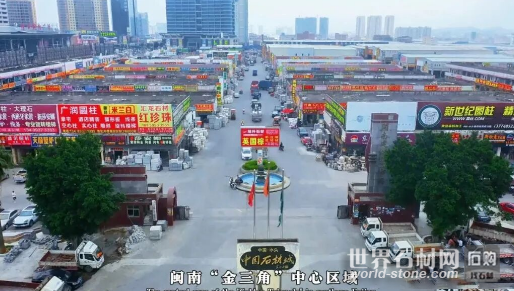
From Beijing to Brussels, from the Shuitou stone base to the offices of the Ministry of Finance, that generation, with perseverance and responsibility, with facts and confidence, tore off the label of “dumping” and the stigma of “high energy consumption, high pollution, and high resource consumption.” More than forty years have passed. Stone remains the same material that carries architecture and aesthetics, but the Chinese stone industry is no longer the naive industry that could only argue “we did nothing wrong” when faced with criticism.
It has learned to protect itself with rules, to prove itself with evidence, and to transform itself in crises and grow through challenges. These two tough battles not only preserved the survival space of the Chinese stone industry but also reshaped its development landscape, making “green, circular, and high-quality” the industry’s foundation, laying a solid foundation for the subsequent transformation and upgrading of the stone industry and its global expansion.