
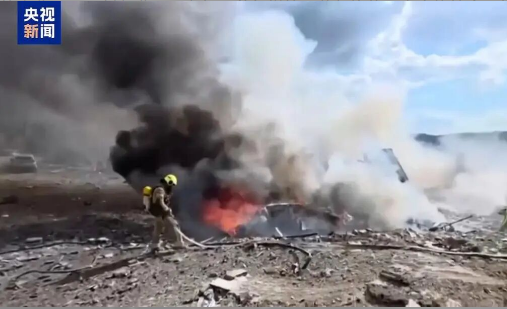
On February 28, 2026, the smoke of war once again filled the Middle East. The United States and Israel launched a joint precision military strike against Iran, resulting in the tragic death of Iran’s Supreme Leader Ayatollah Khamenei and the complete blockade of the Strait of Hormuz. The Middle East situation instantly plunged into its most critical abyss in decades. While the focus of the conflict shifted to geopolitical maneuvering, a traditional industry overlooked by the outside world—the stone industry—which carries the hopes of Iran’s people and economy, was undergoing a struggle for survival and making crucial choices amidst the dual pressures of war and sanctions. This article, based on the latest developments in 2026, provides an exclusive analysis of the Iranian stone industry’s resource base, current predicaments, core products, and future prospects under the shadow of war, unlocking the truth behind this battle between “stubborn stone and raging fire.”
I. The Storm’s Core: Double Suffocation Amidst Geopolitical Turmoil
To understand the current state of Iran’s stone industry, one must first recognize its fatal predicament—this conflict is not an isolated military clash, but rather a double strangulation caused by long-term sanctions and internal economic difficulties, each impact striking at the industry’s very core.
The military strike of February 28, 2026, became a decisive turning point in the Iranian situation. The US-Israeli coalition’s target was the core of Iranian politics. Khamenei’s assassination not only triggered power turmoil within Iran but also signified that external pressure on Iran had escalated into a “decapitation” regime intervention. Following the operation, US President Trump publicly stated his intention to “promote regime change in Iran” and signaled support to the opposition, attempting to dismantle Iran’s existing political system through a pincer movement.
Iran’s retaliation was swift and fierce. The Islamic Revolutionary Guard Corps immediately announced missile and drone strikes against relevant US and Israeli targets and formally blocked the Strait of Hormuz—a vital energy artery carrying nearly 40% of the world’s oil shipments. Its closure not only triggered dramatic fluctuations in global oil prices but also directly severed Iran’s maritime export routes for various goods. Stone, a crucial Iranian export, was among the first to suffer a fatal blow.
More complexly, this conflict was not a simple black-and-white confrontation; diplomatic channels were not yet fully closed. Just two days before the airstrikes, the third round of indirect negotiations between Iran and the United States had concluded in Geneva. Both sides stated that their positions on key issues such as the nuclear issue and the lifting of sanctions were converging, and agreed to hold follow-up technical negotiations on March 2nd. This bizarre situation of “fighting while negotiating” precisely reflects the harsh reality facing Iran: externally, it faces the threat of war and long-term sanctions; internally, it suffers from inflation and economic hardship. The stone industry is one of the most vulnerable casualties in this game—soaring transportation costs, blocked export channels, a paralyzed international payment system, and collapsed domestic investment confidence—each of these factors is enough to worsen the already struggling industry.
II. The Sleeping Giant: A World-Class Stone Asset That Has Been Neglected
Few people know that this country, shrouded in war and sanctions, not only possesses vast oil and gas resources but is also a “hidden goldmine” in the global stone industry. Iran’s stone resource endowment is sufficient to support it as a core player in the global stone industry, yet due to multiple constraints, it has become a “sleeping giant,” never able to unleash its true potential.
In terms of resource reserves, Iran can be considered a “giant” in the global stone industry. According to exclusively compiled data, Iran possesses proven reserves of decorative stone reaching 27 billion tons, ranking among the world’s top. The country has approximately 3,800 mining sites, with 56 types of stones already mined. Developed resources account for 25% of the total, while the remaining 75% of high-quality resources remain undeveloped. At the current rate of extraction, its stone resources could be mined continuously for 180 years. Nominally, Iran’s mines have an annual mining capacity of 30 million tons and a processing capacity of 180 million square meters. At its peak in 2012 (1391 in the Iranian calendar), stone extraction reached 16 million tons, and processed stone output reached 110 million square meters, making it a significant source of supply for the global stone market.
However, this glory has long since faded. Today, Iran’s stone industry is experiencing the awkward situation of “overcapacity coexisting with shrinking actual output.” Currently, of Iran’s approximately 1,900 quarries, only 20% are operating normally, with nearly half shut down or idle. Of the 6,600 stone processing plants, over a thousand have completely closed, and those still operating operate at only around 40% capacity, with some even operating only every other day. In recent years, Iran’s actual annual stone production has shrunk to 10-14 million tons of raw stone, and processed stone production has fallen to 80-90 million square meters, a decrease of nearly 30% compared to its peak. Even more regrettable is that of the 17 million tons of decorative stone mined annually by this world-class resource-rich country, only 4% is exported, with annual export value less than $200 million, while industry estimates project an export potential of up to $5 billion. This stark contrast vividly illustrates the plight of Iran’s stone industry.
III. Roots of the Predicament: Four Shackles Stifling the Stone Industry’s Vitality
The decline of Iran’s stone industry is no accident, but rather the result of the long-term superposition of four shackles: domestic policies, technological level, market environment, and geopolitics. The outbreak of war merely intensified these latent contradictions, pushing them to the brink of irreversibility.
The first shackle is the long-term stagnation of the domestic construction industry. The stone industry and the construction industry are interdependent; domestic market demand is the core support for the industry’s development. Iran’s annual domestic consumption of decorative stone is approximately 7 million tons, accounting for 35%-40% of its total production. However, in recent years, affected by economic sanctions, escalating inflation, and a continuous decline in people’s purchasing power, Iran’s real estate market has fallen into a prolonged slump, with a significant reduction in new residential and commercial building projects, leading to a sharp decline in domestic demand for stone. As Safi, president of the Iranian Stone Association, stated, “When the domestic economy is booming and the consumer market is abundant, stone products have no trouble selling; but the current economic recession is a fatal blow to every industry, and the stone industry is naturally no exception.”
The second constraint is the “self-inflicted friction” of export policies. This is the most concentrated pain point complained about by Iranian stone companies and the core bottleneck restricting exports. The Iranian government imposes a tariff as high as 20% on stone exports, a policy that has been angrily denounced by the industry as a “brake that kills export competitiveness.” Ahmed Sharifi, secretary general of the Iranian Stone Association, has publicly stated that this tariff policy “is 100% in conflict with relevant Iranian laws,” directly causing Iranian stone to lose its price advantage in the international market. Before the tariff was imposed in 2017 (Iranian calendar year 1396), Iran’s stone exports reached 1 million tons of rubble and 600,000 tons of processed stone. After the tariff was implemented, exports plummeted by 30%-40%, and many long-term overseas customers turned to countries with lower tariffs, such as Turkey and Egypt.
According to Stone.com, the third constraint is the inherent weakness of outdated technology and equipment. Long-term international sanctions have completely severed Iran’s access to advanced international stone mining and processing equipment and technology. Currently, most of the machinery used in Iranian mines is beyond its service life and severely outdated; “removing screws from one machine and installing them on another” has become commonplace in the industry. Outdated mining technology leads to low mining efficiency and severe resource waste. The processing stage lacks refined processing capabilities, meaning that Iranian stone can only export low-value-added raw materials rather than high-value finished products. Even with high-quality varieties, it is difficult to maximize their value. Previously, the government provided loans to 600 stone processing plants, planning to introduce advanced Italian equipment to modernize production lines, but ultimately failed to achieve the expected goals due to sanctions and a shortage of funds.
The fourth constraint is the continued impact of geopolitics and international sanctions. For a long time, the blockade of the international payment system has made it difficult for Iranian stone companies to complete cross-border settlements, preventing overseas customers from making normal payments and straining their cash flow. Soaring transportation and insurance costs have increased logistics costs for stone exports by nearly 50%. Overseas market expansion has been hampered, with many countries hesitant to cooperate with Iranian stone companies due to the risk of sanctions. The resurgence of war in 2026 and the blockade of the Strait of Hormuz have further exacerbated these difficulties, plunging the already struggling Iranian stone industry into a complete survival crisis of “no orders and no goods to ship.”
IV. Persian Treasures: The Unextinguished Charm of Stone Amidst War
Even in dire straits, Iranian stone retains a unique appeal in the international market thanks to its rich variety and superior quality. These stones, hailed as “Persian treasures,” are not only Iran’s resource wealth but also the hope for the industry’s future breakthrough, which is the core reason why the industry continues to have high expectations for their export potential. Based on the latest industry research, Iranian stone can be mainly divided into four categories, each with its own unique and irreplaceable advantages:
Firstly, classic beige and high-end marble are considered the “calling cards” of Iranian stone. Among them, Royal Botticino, known as the “aristocrat” of beige marble, originates from old mines in Fars Province, southern Iran. Its white base is tinged with a faint yellow, and its texture resembles natural jade, with a delicate feel. In its early years, finished slabs in China sold for as much as 1500-1800 yuan/㎡, making it a top choice for high-end hotels and villa decoration. White Palace Beige, sourced from Fars Province and Isfahan, is a whitish beige with a clean base color, uniform veins, and superior stability compared to ordinary beige. It is widely used for floors and walls in high-end residential buildings. In addition, Persian Grey (Armani Grey), Iranian Cloud Grey, and Pink Marble (Pink Jade) are also highly competitive. Persian Grey, from Isfahan, features a dark grey base with elegant white veins and a strong luster after polishing, making it a popular choice for modern style decoration. Currently, the market demand for grey marble continues to grow.
Secondly, travertine is one of Iran’s most representative export varieties. Iran boasts abundant travertine resources, primarily sourced from Mahalet, Hamadan, and Isfahan. Its colors encompass a variety of hues, including white, yellow, red, and silver-gray. Highly durable, long-lasting, and easy to cut, it is widely used for building exteriors, lobby floors, and outdoor landscaping. Among these, Van Gogh Gold Travertine, with its yellow base and unique porous texture, has become a popular choice for high-end interior decoration. Iranian Beige Travertine, from mines around Isfahan, features a creamy yellow base with a delicate jade-like texture and dense, flowing patterns, targeting a niche high-end market and often used for villa feature walls and entryway finishes. Red travertine, once highly sought after, has seen reduced mining operations due to declining market demand.
Thirdly, agate/jade-like stones represent the “high-end” of Iranian stone. Primarily sourced from Kerman and Yazd, white agate (translucent white jade) is highly translucent, with a pure white or milky white base color. It exhibits a luminous effect when backlit, with a texture resembling ice jade, and is often used for translucent interior walls and hotel reception desks. Orange jade (honey jade) ranges in warm orange to honey color, with a strong sense of flowing texture, making it a top choice for high-end club decoration. Green jade is mainly light to dark green, sometimes with white veins, and has good translucency, suitable for background walls and handicrafts.
Fourth, granite, mainly distributed in the mining areas of southern and central Iran, with Iranian Blue Eye being the most famous. This variety originates from Mashhad and other regions in Khorasan Province. It has a light gray or bluish-gray base color, accompanied by blue-purple and black veins, containing blue shimmering crystals. It gleams like a gemstone in sunlight, has a dense, hard, and heavy structure, suitable for villa interior and exterior walls, outdoor landscape walls, and other outdoor projects.
Fifth, a crossroads: Under the flames of war, where does Iranian stone go?
Standing at the juncture of March 2026, Iran’s stone industry is at an unprecedented crossroads, facing devastating short-term impact, uncertain medium-term recovery, and daunting long-term hopes for a breakthrough. These intertwine to paint a realistic picture of the industry’s future, its fate inextricably linked to the course of geopolitics.
In the short term, the impact of the war is devastating and continues to escalate. The blockade of the Strait of Hormuz means the complete cessation of Iran’s maritime export routes for stone, which accounts for over 90% of its exports. Airstrikes have affected major stone-producing cities like Isfahan, forcing some mines and processing plants to shut down and causing severe equipment damage. The upheaval in the central government has led to a standstill in industry support policies, leaving businesses without stable policy support. Even companies not directly affected by the war face a chain reaction of transportation disruptions, order cancellations, and frozen funds. The Iran Stone Exhibition, originally scheduled for October 2026 in Isfahan, is now uncertain as the industry’s most important platform for exchange and order placement. This undoubtedly exacerbates the already difficult situation for Iran’s stone exports.
In the medium term, the key to the industry’s recovery depends entirely on the geopolitical landscape, which is fraught with uncertainty. If the US and Iran can achieve a breakthrough in the technical negotiations on March 2nd, reaching a phased compromise and gradually lifting some sanctions, the Iranian stone industry will have a chance to breathe. Long-awaited measures such as the removal of the 20% export tariff, the introduction of advanced equipment, and the attraction of foreign investment will become possible. Suppressed export demand is expected to gradually be released, industry operating rates are expected to increase, and export value may see a slight increase. However, if the conflict continues to escalate, or even spreads into a full-blown regional war, the Iranian stone industry will face a longer winter, with more mines and processing plants forced to close, jobs lost, and the industry potentially collapsing.
In the long run, the competitiveness of Iran’s stone industry remains fundamentally sound, and the hope for a breakthrough has not been completely extinguished. The 27 billion tons of stone reserves will not disappear due to the war, and the unique charm of high-quality varieties such as Saanna Beige, Blue Eyes, and Van Gogh Gold remains irreplaceable in the international market. After years of development, Iran possesses a skilled workforce and technical personnel, a valuable asset for the industry’s recovery. The key to breaking the industry’s stagnation lies in whether Iran can find a suitable development path in the future political and economic restructuring: whether to break free from dependence on resource exports and shift towards deep processing and brand building to increase product added value; or to continue adhering to traditional models and relying on raw material exports; whether to proactively embrace international market rules, optimize export policies, and attract overseas cooperation; or to continue its closed-off internal circulation, struggling to survive amidst sanctions and difficulties. These choices will determine whether Iran’s stone industry can truly “awaken” and emerge from the shadow of war.
Like a stubborn rock being tempered by fire, it may turn to ashes or become pure gold. The story of Iran’s stone industry is a story of resources and predicaments, potential and constraints, destruction and hope. It possesses a wealth of resources that the world envies, yet it has long been hampered by policy, technology, and geopolitics.