
Many people still cling to the outdated notion that “one mine makes three generations rich” when it comes to stone quarries. Once upon a time, a mine was a “mobile money-printing machine,” and holding mining rights meant holding a continuous stream of wealth. Insiders spoke of mines with envy.
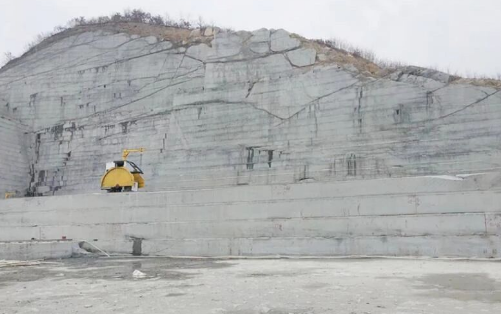
However, in just a few years, the tide has turned. The lament of “one mine makes three generations poor” has gradually replaced the boastful sentiment. While this statement is somewhat exaggerated, it encapsulates the harsh reality of the current stone quarry industry: the era of rampant, unregulated profits is over. The days of making easy money through luck and resources are gone. Now, those who can establish themselves and achieve sustained profitability in the industry are pragmatic individuals who understand refined operations and are willing to cut costs.
It’s not that stone quarries have no future; it’s that you haven’t found a new way to survive in the industry.
01 From “Hot Commodity” to “Hot Potato”: The Core of the Mine’s Predicament Isn’t the Market Situation
Walking into any stone-producing region, one can feel the chill in the market. The construction industry is undergoing a deep adjustment, with a continuous decline in real estate starts and a significant reduction in pre-furnished housing projects, resulting in a visible contraction in demand for stone. Companies that acquired mines at industry peaks a few years ago are now mostly facing the predicament of unsold products—mountains of slabs piled up in the mine yards, yet no potential buyers are forthcoming, making cash flow increasingly difficult.
However, many mine owners haven’t realized that the sluggish market is merely a “symptom.” What truly crushes the mines is an often overlooked but deadly hidden killer—logistics costs.
Many mine owners, when calculating their costs, only focus on the direct costs of mining, neglecting the long transportation chain of stone from the mine to the processing plant and then to the end-user construction site. Even the best quality mine, if located deep inland and far from consumer markets, will see its profits quickly devoured by the combined costs of high fuel, vehicle wear and tear, and long-distance transportation.
The ultimate outcome is often “losing money while gaining publicity”: High costs make the product uncompetitive in the market; if not operating, it bears fixed costs such as equipment depreciation and labor wages; if operating, working capital is continuously depleted, leading to increasing losses and a dead end.
02 A Clear Calculation: Logistics Costs are the “Profit Black Hole” for Mining Companies
Many mine owners lose more and more money because they haven’t understood the “muddled account” of logistics. Let’s do a concrete calculation to see the terrifying nature of logistics costs:
According to Stone.com: Assuming a mine has an annual production capacity of 500,000 tons, the average transportation distance for stone is 1,000 kilometers. If all transportation were by road, at the current market average price of 0.35 yuan per ton-kilometer, the trunk logistics cost alone would reach 175 million yuan. Meanwhile, mines of similar size typically only generate around 100 million yuan in annual net profit—meaning that logistics costs alone are enough to eat up profits, or even result in losses.
Even more devastating is that this doesn’t include the internal short-haul costs within the mine. From the mining face to the temporary storage yard, and from the storage yard to the processing plant, fuel oil trucks shuttle back and forth on rugged mountain roads, each trip a drain on resources. Fluctuations in diesel prices, vehicle maintenance, tire wear, and the impact of environmental restrictions… every link constantly squeezes the already meager profit margins.
This is the current state of the industry: many mining companies, despite having orders and production capacity, are losing money, primarily because they are being dragged down by the bottomless pit of logistics costs.
03 Breaking the Mold, Not Giving Up: Two Practical Strategies to Squeeze Every Penny of Profit from Costs
In the midst of an industry downturn, are stone quarries truly doomed? The answer is clearly no. The more sluggish the market, the more the value of meticulous management becomes apparent—eliminating extensive operations and rigorously controlling every cost step is crucial for survival and prosperity in the fierce competition. The following two market-proven strategies for breaking the mold are worth considering for every quarry owner.
Strategy One: Strategic Site Selection, Moving Towards “Large-Scale Logistics,” Leveraging Water Transport for Disruptive Advantage
The adage “To get rich, build roads first” still applies to the stone quarry industry. However, today’s “roads” are no longer just the primary highways at the quarry entrance, but rather low-cost, large-scale logistics channels. For mining companies, the logistics radius directly determines survival, and proximity to the port is the most crucial strategic high ground.
Many mine owners, when acquiring ore, only focus on the quality and reserves of the stone, neglecting the crucial question of “how to transport the stone out.” The correct approach is to ask yourself three questions before acquiring or evaluating mining rights: How far is it from the nearest railway freight yard? How far is it from a navigable port? Can water transport be used to reduce transportation costs?
The closer the answer, the higher the survival probability of the mining company. This is because water transport costs are only a fraction, even a tenth, of the cost of road transport—for the same 1000-kilometer distance, road transport costs about 350 yuan per ton, while water transport only costs 50-80 yuan, saving 270-300 yuan per ton.
Don’t underestimate this difference of a few hundred yuan: a mine with an annual production capacity of 500,000 tons can save 135 million to 150 million yuan in net profit annually just from water transport alone. This isn’t a technological advantage, but a disruptive force in cost structure—while competitors are still meticulously calculating fuel costs of a few cents per ton per kilometer, you’ve already driven logistics costs to rock bottom. This advantage translates into pricing power in the end-market and the confidence to survive.
Here’s a practical suggestion for mine owners: If your mine is more than 50 kilometers from the dock, it’s advisable to reassess the value of your mining rights; if it’s more than 100 kilometers, unless the quality of the stone is irreplaceable, proceed with caution.
Option Two: Equipment Innovation, “Oil-to-Electric” Transition, Seeking Efficiency from New Energy Sources
Having solved the cost problem of trunk transportation, short-haul transportation within the mine cannot be ignored—this cost is often a “blind spot” for many mine owners, yet it can yield huge profit margins.
Traditional fuel-powered mines operate within the mine, resulting in astonishing fuel consumption. Taking a 50-ton fuel-powered mining truck as an example, working 10 hours a day, its fuel consumption can reach over 200 liters. At a diesel price of 8 yuan per liter, the daily fuel cost for a single truck is as high as 1600 yuan. If a mine has 20 such trucks, the daily fuel cost would reach 32,000 yuan, exceeding 10 million yuan annually. Even more problematic is the increasing risk of older fuel-powered trucks being phased out due to rising environmental emission standards, compounded by environmental fines and equipment upgrade costs.
The key to breaking this deadlock is the large-scale introduction of new energy mining trucks, promoting the “oil-to-electric” conversion. Many mine owners worry about the power and range of electric vehicles, but in the fixed-route, short-distance transport scenarios of mines, the advantages of new energy mining trucks can be fully realized, even far exceeding those of fuel-powered trucks. The core advantages are threefold:
First, energy costs are directly halved. For the same 50-ton mining truck, the electric version consumes approximately 200 kWh per 100 kilometers. At an industrial electricity price of 0.6 yuan/kWh, the cost per 100 kilometers is only 120 yuan. In contrast, the gasoline version consumes approximately 60 liters of fuel per 100 kilometers, costing as much as 480 yuan – the energy cost of the electric vehicle is only one-quarter that of the gasoline vehicle. If the mine has the resources to build a photovoltaic power station or utilize off-peak electricity for charging, energy costs can be further reduced, even to a few cents per kilometer.
Secondly, maintenance costs are extremely low. Electric vehicles lack complex mechanical structures such as engines and transmissions, simplifying maintenance and resulting in a much lower failure rate than gasoline vehicles. There’s no need for regular oil, oil filter, or air filter changes, and no hassle of major engine overhauls. For the high-intensity operation of mines, minimizing equipment downtime is the greatest efficiency gain.
Thirdly, policy incentives support the industry. The government is vigorously promoting carbon peaking in the industrial sector. Many local governments offer clear subsidies and financial support to mining companies that purchase new energy vehicles and carry out energy-saving renovations—subsidies can reach 20%-30% of the vehicle price, along with supporting policies such as green credit and tax breaks. Utilizing these policies effectively reduces equipment investment costs.
For example, an electric mining truck costing 800,000 yuan, with a 20% government subsidy, only requires an actual investment of 640,000 yuan, cheaper than a comparable gasoline-powered truck. Adding the annual savings in fuel and maintenance costs, the investment payback period is typically 2-3 years; every penny saved thereafter is pure profit.
04 Real-world Case Study: Annual Cost Reduction of 57 Million Yuan – They Survived by These Two Strategies
Talking about ideas is useless; real-world cases are the most convincing. A granite mine in Jiangxi Province, about 40 kilometers from the nearest Yangtze River port, before 2019, like most mines, used gasoline-powered trucks for transportation, resulting in high logistics costs and teetering on the brink of losses for many years. In 2020, they made two decisive adjustments, achieving profitability in less than a year and reducing costs by over 57 million yuan annually, thus establishing a firm foothold amidst the industry downturn:
First, they established a dedicated transshipment yard at the Yangtze River port, transporting finished stone products from the mine to core consumer markets in the Yangtze River Delta via waterway. The freight cost per ton decreased from 350 yuan to 90 yuan, saving over 50 million yuan annually in trunk logistics alone.
Second, they comprehensively promoted the “oil-to-electricity” conversion. All 20 fuel-powered mining trucks within the mine were replaced with electric ones, utilizing off-peak electricity for charging. The cost per kilowatt-hour was as low as 0.3 yuan. After the conversion, annual energy costs decreased from over 10 million yuan to less than 3 million yuan, saving another 7 million yuan.
These two adjustments combined resulted in annual cost reductions of 57 million yuan. In the current fiercely competitive stone industry, this 57 million yuan represents pure profit, the core strength that allows them to crush their competitors and maintain profitability—while their rivals are still struggling for a few yuan per ton in profit.
Conclusion: The future of mining depends on “hard power of cost control”
The stone mining industry has indeed bid farewell to the era of “making money blindly,” but this does not mean the industry has no future. The market is undergoing rapid reshuffling: those speculators who only speculate on mining rights and profit from market trends will eventually be eliminated; while those entrepreneurs who focus on restructuring logistics with a “port mindset” and reducing energy consumption with a “new energy mindset” will ultimately be rewarded by the market.
The future competition in the stone mining industry will no longer be about who has the best stone quality—beautiful stone is everywhere; nor will it be about who has the lowest mining costs—mining technology has already matured. The real competition is about the ability to control costs across the entire chain, a cost battle every kilometer from the mine to the end consumer.
Whoever can minimize logistics costs and reduce energy consumption to the limit will survive the industry downturn and thrive more than others.
Finally, I want to ask all mine owners: How far is your mine from the port? Have you really started converting your oil mine to electricity?